

How Perfectionism Lives in Your Nervous System
Perfectionism Isn't a Mindset Problem. It's a Nervous System Problem.
What is perfectionism?
Perfectionism is a pattern of thinking and behavior characterized by setting excessively high standards for oneself and tying self-worth to whether those standards are met.
It's not the same as having high standards or caring about quality. The difference is what happens when you fall short: someone with healthy ambition adjusts and moves on; a perfectionist experiences falling short as a fundamental failure of self. Or, just as often, they don't allow themselves to try at all because the risk of failure feels unbearable.
Perfectionism typically shows up in a few recognizable ways: procrastination (not starting because you might not do it perfectly), over-preparation, difficulty delegating, harsh self-criticism, rumination, and an inability to feel satisfied even when something goes well.
Clinically, perfectionism is associated with anxiety, depression, OCD, and eating disorders. At its roots, it often develops in early experiences where love or approval felt conditional on performance, or as a way to avoid punishment, or to feel some sense of control in an unpredictable environment.
What makes perfectionism particularly tricky is that from the outside, it can look like a strength. Many people wear it as a badge of honor. And to be fair, early on it probably worked it may have helped someone achieve, stay safe, or earn approval. Perfectionists are often high achievers. But the drive tends to come from fear rather than genuine motivation, which makes it exhausting and unsustainable over time.
Here's the reframe that changes everything: perfectionism isn't a personality trait. It's a survival strategy. And to really understand it, and change it, you have to look at what's happening in the body.
What happens in the nervous system?
The nervous system is always moving; shifting between sympathetic activation (upregulation) and parasympathetic rest (downregulation). This is natural and healthy.
When we encounter something exciting, stressful, or threatening, the sympathetic nervous system mobilizes us. Think about the body preparing to run from a predator: suddenly you're not hungry or thirsty, your vision widens, your senses sharpen, every part of you is oriented toward the threat. If the threat is real, you fight or flee. If you realize it was just a raccoon, you settle. Once the body has successfully responded, whether it fought, fled, or recognized there was no real danger, the parasympathetic nervous system takes over. Shoulders drop, gaze softens, you can feel your hunger again, sleep comes more easily. This is the "rest and digest" state: presence, ease, the body doing what it needs to do.
In a healthy system, this cycle completes. Energy rises to meet a challenge and then discharges once the challenge has passed.
The diagrams below show what this looks like in the nervous system — and where perfectionism tends to get stuck.
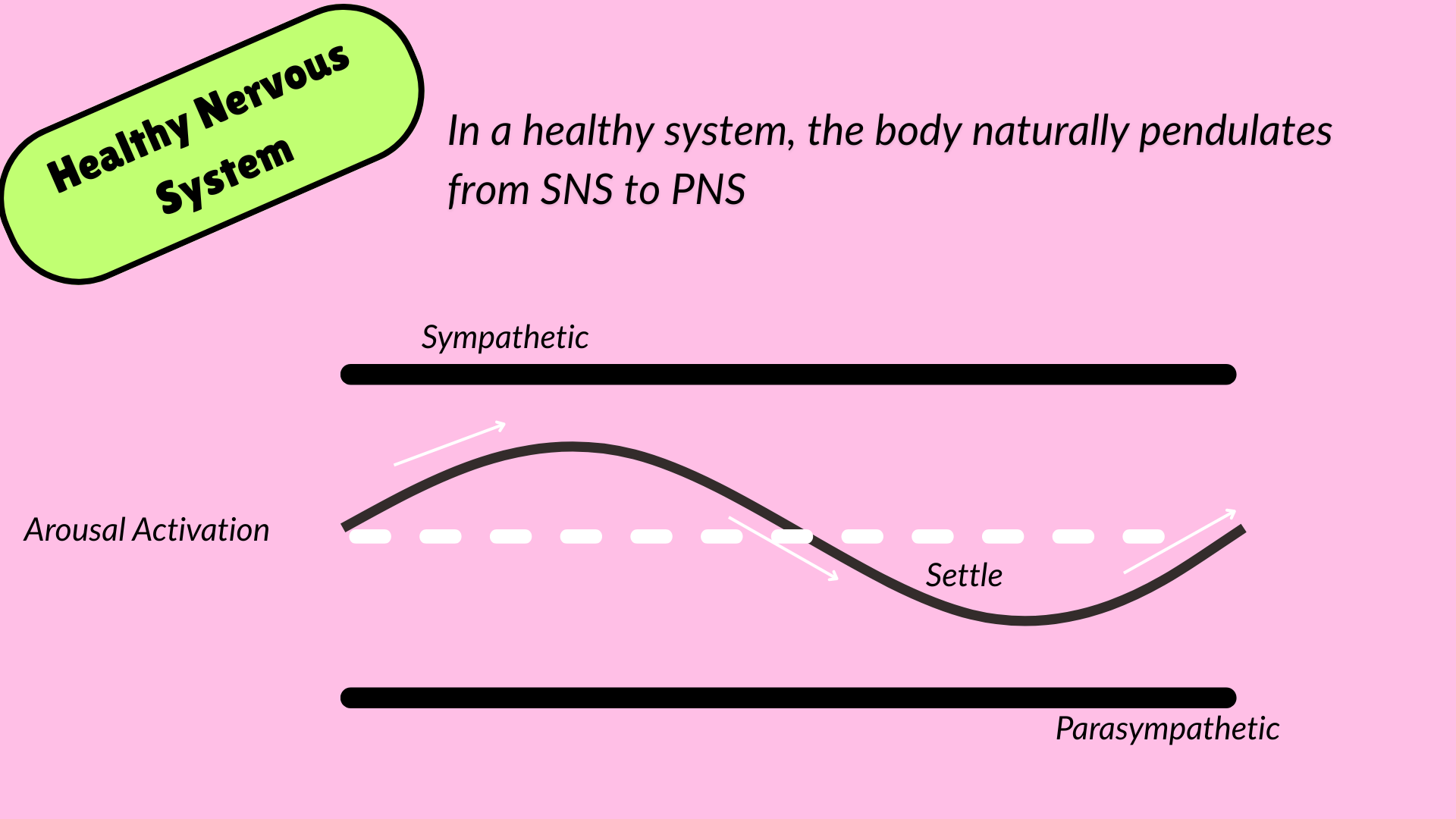
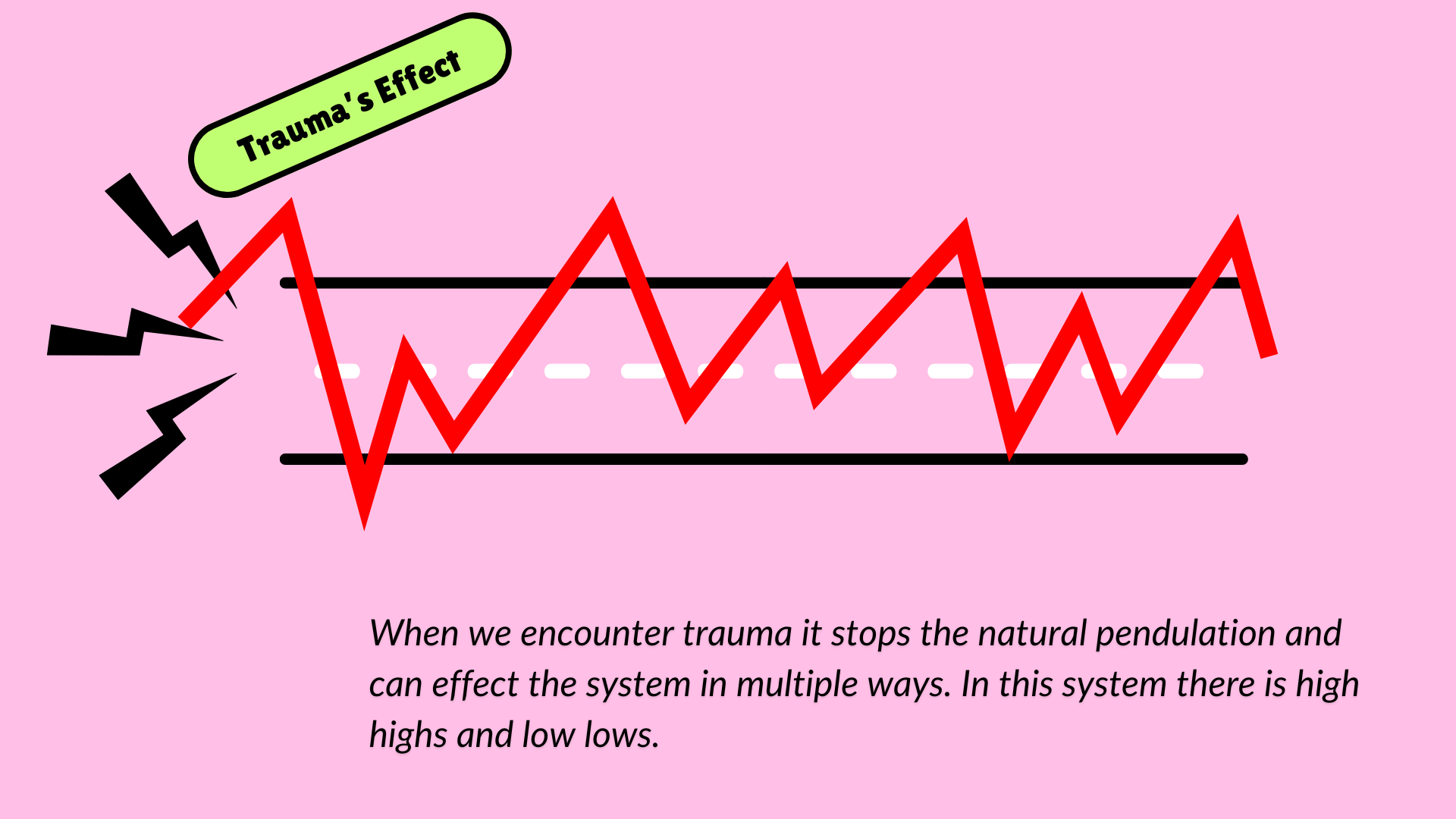
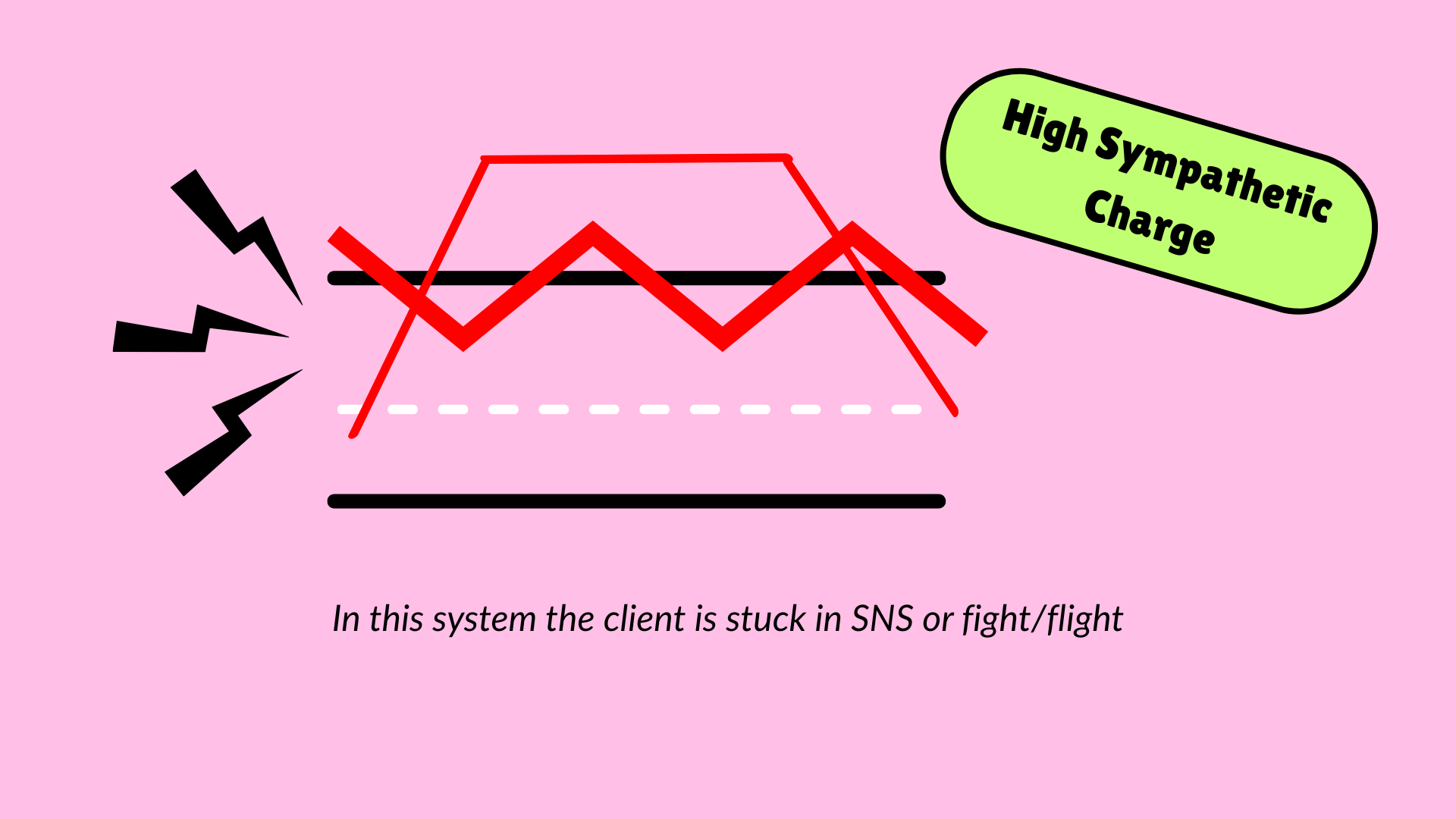
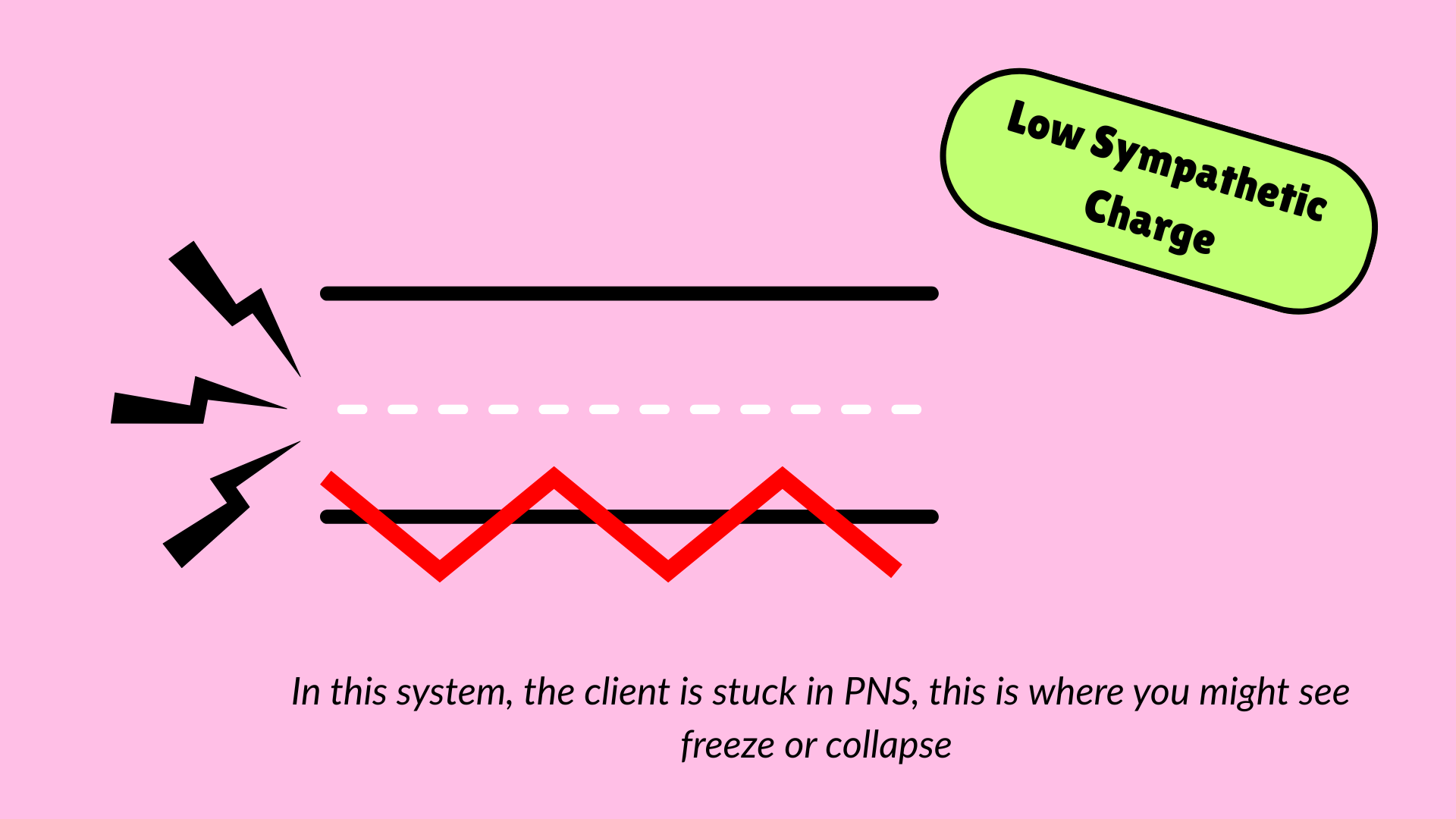
Diagram 1 — Healthy Nervous System: The body rises to meet a challenge and settles once it's passed. This is what regulation looks like.
Diagram 2 — Dysregulation: For some, trauma creates a system of extremes — unpredictable swings between high activation and collapse, with no stable middle ground.
Diagram 3 — High Sympathetic Charge: This is where many perfectionists live — stuck in activation, always braced, never quite able to settle.
Diagram 4 — Low Sympathetic Charge: When the system has been running on high for too long, it can shift into shutdown — numbness, flatness, inability to start. This is why perfectionism and procrastination so often go hand in hand.
For a perfectionist, the cycle doesn't complete.
The threat arrives, a deadline, a mistake, a moment of perceived judgment, and the sympathetic system activates, bringing with it all that physiological vigilance: the alertness, the racing mind, the cognitive rumination. But when the moment passes, the body doesn't fully discharge. It stays mobilized. Braced. Waiting for the next threat or still managing the last one. There's no internal signal that it's safe to settle, because for a perfectionist, the threat is never fully resolved. There's always something that could have been done better, something that might go wrong, some standard not yet met.
The exhaustion that perfectionists feel isn't laziness or weakness. It's a nervous system that never gets to rest.
When the body can't feel "enough"
One of the most disorienting aspects of perfectionism is the inability to feel finished. You complete something like a project, a conversation, a workout and instead of satisfaction, there's just a vague sense that it wasn't quite right. Or you're already onto the next thing before you've registered that the last one is done.
This isn't a thinking problem. It's an interoception problem.
Interoception is our ability to sense what's happening inside the body, hunger, fatigue, the felt sense of completion, or ease. In a hypervigilant system (or what we sometimes refer to as GHIA global high intensity activation), that internal signal gets drowned out. The nervous system is so occupied scanning for threat that the quieter cues, that's enough, you can rest, that was good, never make it through. The bar keeps moving, not because the perfectionist genuinely cannot register that the threat has passed.
What happens when we fail, or think we have
For many perfectionists, the fear isn't just about falling short. It's about what falling short means: that they are fundamentally flawed, unworthy, unlovable. These can show up like thoughts but its really shame. And shame has a very specific effect on the nervous system.
When shame hits, the body can shift rapidly from sympathetic activation into dorsal vagal collapse, the oldest branch of the autonomic nervous system, associated with freeze, shutdown, and disconnection. This is the response that evolved for inescapable threat: when there's no way to fight or flee, the system collapses inward. In a perfectionist, this can look like suddenly being unable to work, withdrawing, going numb, or losing hours to a kind of flatness that feels impossible to explain. It often follows a perceived failure or criticism, even a mild one.
This is the collapse that lives underneath the drivenness. And it's why perfectionism is so exhausting: the system is cycling between hypervigilant activation and shame-driven shutdown, with very little time spent anywhere in between.
What this feels like in the body
Before exploring what helps, it's worth recognizing what chronic perfectionism feels like somatically, because many perfectionists have spent so long in their heads that they've lost touch with these signals entirely.
You might recognize some of these:
Chronic tension in the jaw, neck, or shoulders — the body braced and holding
Shallow breathing, or a tendency to hold the breath
Difficulty sleeping, or waking with the mind already running
A sense of restlessness or inability to be still, even when exhausted
Digestive issues, headaches, or physical symptoms with no clear cause
A flat or numb feeling after a perceived failure — difficulty accessing emotion
The inability to feel pleasure or satisfaction even when things go well
What helps?
If perfectionism is a nervous system pattern, then thinking your way out of it has limits. Insight is valuable, understanding where the pattern came from, recognizing the inner critic, challenging all-or-nothing thinking. But insight alone doesn't discharge the stored activation or teach the body that it's safe to settle. For that, you need approaches that work below the level of language.
Somatic Experiencing, developed by Peter Levine, works directly with the incomplete survival responses that keep the nervous system stuck. Rather than talking about the perfectionism, SE helps the body slowly complete what it never got to finish the discharge, the settling, the return to baseline. Over time, the window of tolerance widens, and the body begins to develop an internal experience of "enough."
Creative arts therapy offers something similar through a different door. The act of making something, working with materials, moving, creating, is inherently a somatic process. It engages the body and the senses, interrupts cognitive rumination, and provides something the perfectionist system rarely gets: an experience of process over product, of doing something that doesn't have to be perfect to be meaningful. Art-making can also externalize the inner critic, giving it shape, color, form, which creates just enough distance to begin relating to it differently.
Neither of these approaches asks you to simply think differently about yourself. They invite the body into the conversation. And for perfectionism that's often where the real change begins.
Perfectionism can look like a personality trait, a quirk, even an asset. But underneath it is a nervous system that never learned it was safe to rest and a body that has been working overtime for a very long time.
The good news is that patterns formed in the nervous system can change. Not through willpower or positive thinking, but through experiences that teach the body something new. That's slow work, and it's real work. But it's the kind of work that actually creates real change.
If you recognize yourself in any of this, the chronic bracing, the inability to feel done, the crash that follows falling short, somatic and creative arts approaches to therapy are designed for exactly this.Not to help you perform better, but to give your nervous system the one thing it hasn't had in a long time, relief.
Ready to find out what that feels like? Book a consultation with Creative Arts Psychotherapy NYC.